Categories
Books Recommendations

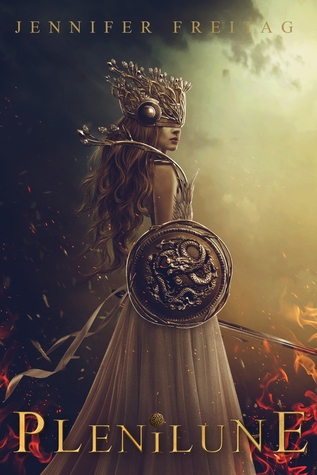
Plenilune by Jennifer Freitag: Heroic, Medieval Portal Fantasy – Book Review

Plenilune

Margaret Coventry is having a small bout of rebellion against her match-making family, when she is kidnapped and taken by force into the alternate universe of Plenilune. You see, Rupert de la Mare, soon-to-be Plenilune’s overlord, has been challenged whether he can take a human wife, and the nefarious Rupert doesn’t let challenges slide.

This is only a small part of the plot (the blurb would make you think otherwise). Margaret is a fish out of water as she begins to learn – and love – the magical landscape and history of Plenilune and its people. Along the way, Margaret breaks a curse with the help of a dragon, hunts down a wild boar (not intentionally), and rescues a kingdom. Oh, and she meets Dammerung, the War-wolf.

Book Blurb:
The fate of Plenilune hangs on the election of the Overlord, for which Rupert de la Mare and his brother are the only contenders, but when Rupert’s unwilling bride-to-be uncovers his plot to murder his brother, the conflict explodes into civil war. To assure the minds of the lord-electors of Plenilune that he has some capacity for humanity, Rupert de la Mare has been asked to woo and win a lady before he can become the Overlord, and he will do it—even if he has to kidnap her.

(The blurb really doesn’t do the book any justice, but I suppose the book cover art more than makes up for it. Book cover art is by Carlos Quevedo, his amazing work HERE.)
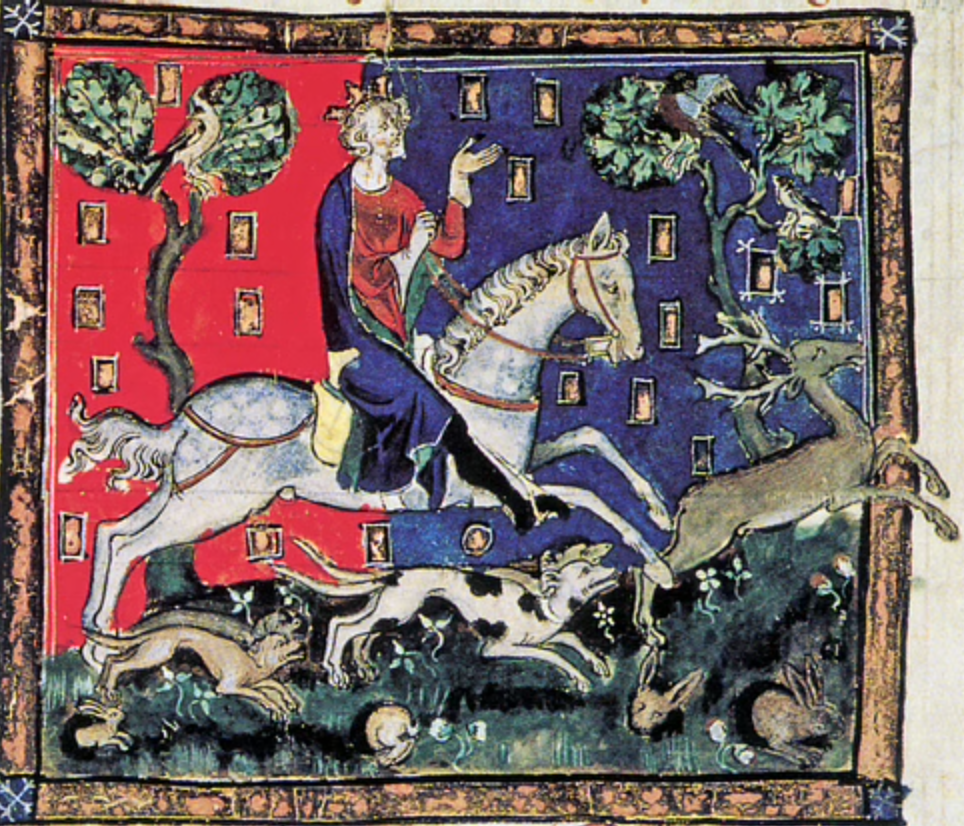
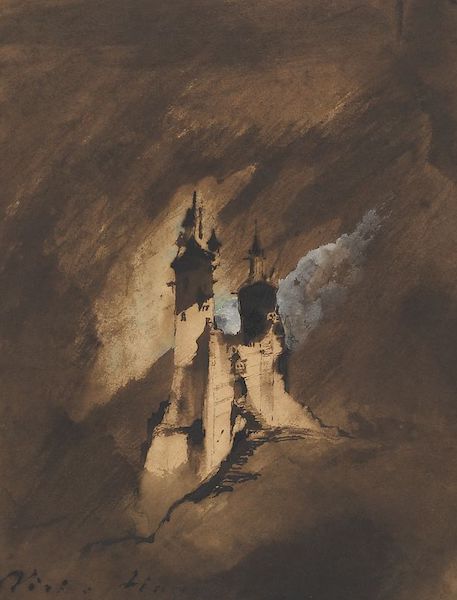
Plenilune. King John hunting, unknown painter.
The wicked King John goes hunting (14th Cent.)
Categories
Books Memes Recommendations

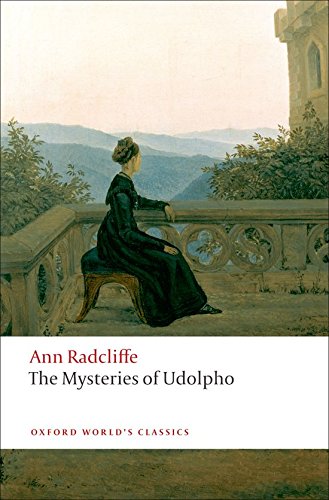
The Mysteries of Udolpho by Ann Radcliffe: Book Review

Mysteries of Udolpho Cover

The first time I heard of The Mysteries of Udolpho by Ann Radcliffe was in Jane Austen’s Northanger Abbey. (I think that’s the case for most people.) In Northanger, Catherine Morland’s fondness for Gothic novels and active imagination results in a disastrous misinterpretation, and Mysteries of Udolpho is one of those novels. Clearly, not very high praise when it comes to practical real life.

There is much villainy afoot …

This led to the question, whether the spirit, after it has quitted the body, is ever permitted to revisit the earth; and if it is, whether it was possible for spirits to become visible to the sense … 

In Mysteries of Udolpho, Emily St. Aubere’s father similarly admonishes her to not give in to impractical sentimentality. But then he dies and leaves her orphaned in the hands of his rather shallow sister, Madame Cheron. Madame Cheron and Emily do not get along, to put it mildly. 

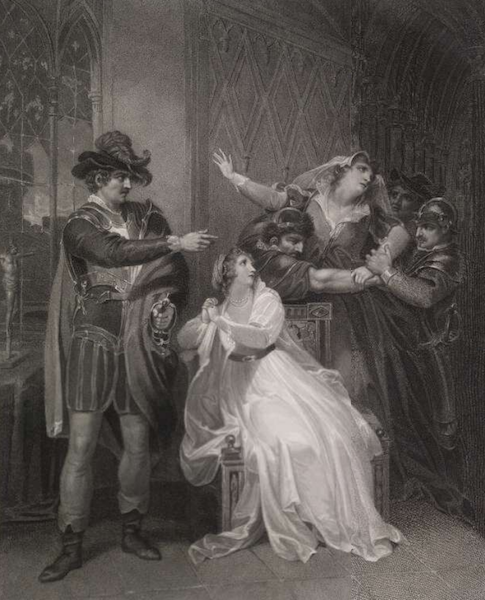
Emily and Madame Cheron threatened by Montoni. Copyright: Trustees of British Museum

That situation worsens when Madame Cheron ends up marrying Signor Montoni, a stylish Italian whom everyone seems to admire but no one seems to like. Montoni is the quintessential Gothic villain who, gambles, drinks, cheats, broods and schemes. (I expect he had a mustache too, which he twirled a lot as he brooded.)

Poor Emily has a terrible time of it all. She learns her father was hiding a terrible secret from his salad days. Her engagement with young Valancourt is broken off and her hand promised to another without her consent. Her home and father’s impoverished estates in France are rented away, and Montoni packs them off (eventually) to the desolate castle of Udolpho. 

Nestled in the Apennine mountains of Italy, Udolpho’s grandeur has faded with time and neglect. It once belonged to Montoni’s relative, Signora Laurentini, who died in mysterious circumstances. There are rumors that Montoni killed her off out of jealousy and to grab her estates. Certainly, nothing can be put past Montoni, who it turns out is now leading a band of mercenaries, the Condottieri.

Categories
Art & Illustration Recommendations Watchlist

Tale of Genji: Anime Movie Review

The Tale of Genji (Genji Monogatari) is a 1987 anime movie directed by Gisaburō Sugii and is a surreal, melancholic mix of fact and fantasy. It’s based on (large portions of) The Tale of Genji written by Murasaki Shikibu back in the Heian period (794 to 1185) of Japanese history, also arguably the world’s first true “novel”.

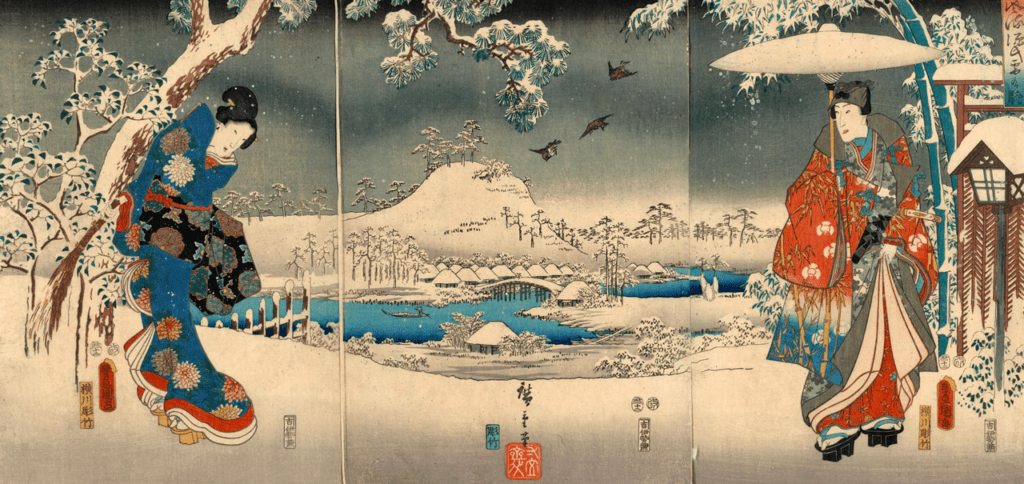
Utagawa Kunisada & Utagawa Hiroshige – Tale of Genji, wood block painting 1853