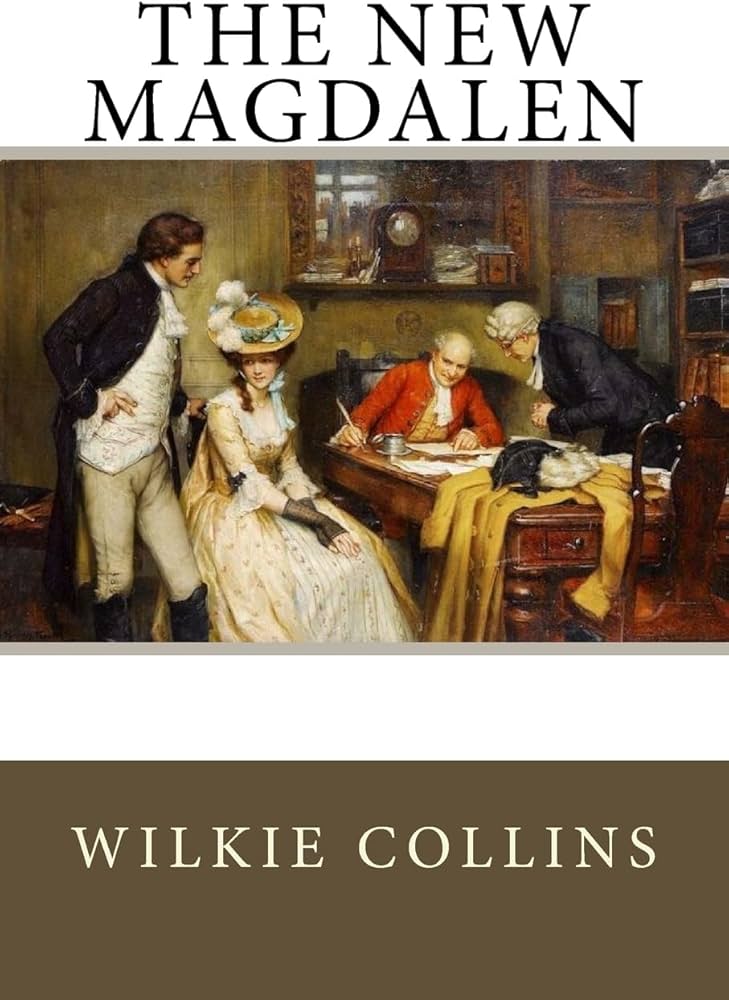
I didn’t expect to enjoy The New Magdalen so much! Some minimal research pointed out that “Magdalenes” were rescue shelters for fallen women (~prostitutes/ unmarried pregnant women) back in 1800s.
The book is set in the background of the Franco-Prussian War (1870-1871). A lady named Grace has sent out from Canada to England, to seek a home with one of her wealthier distant relatives as a paid lady’s companion after her father dies. She is also now engaged to be married to a family friend in England.
And yet within a few months of her arrival in England, another woman shows up (whom people have been mistaking as a fallen woman “Mercy” from one of the said Magdalenes) — and now she claims to be the real Grace!
So, who is the real impostor? How do we figure this out in the 1870s, with no DNA testing, photographs, photocopies, or international or electronic databases? Original handwritten letters from relatives and friends are really all you have, and if lost, you are done for.
It’s a gradual buildup of suspense, one intriguing question after another thrown at you. Collins is the expert in creating an ominous and chilling atmosphere (judging by The Moonstone and The Woman in White), and this book too is a downright thriller towards the last third of the book.
Add in a do-good clergyman to the mix, who firmly believes that true repentance solves all crimes — at least in the eyes of God — and suddenly the question is not who the real Grace is, but whether the fake Grace is willing to repent.
But what are the consequences that the fake Grace could face if she does repent? Collins is clearly trying to build up to a theory that every human who is willing to repent is already deserving of forgiveness and mercy. (Apparently, the fallen woman theme was a quite a popular sensation book formula back then.)
We end with an epilogue in the form of a series of letters which explain what happens to the real Mercy and the real Grace in the end. It’s realistic but also very let’s-end-this-quickly abrupt. I get why Collins chose this cop-out. Apparently the tale was originally intended as a play, and plays don’t really dwell for long on the aftermath of the solution.
I would still give this book a hearty 8 of 10 — for the way Collins brings up critical plot and social questions without spoon-feeding the reader. Believe me, even in a story like this, you will be amazed by the plot twists. Who will forgive whom, and who really needs forgiveness?
Read The New Magdalen for the Classics Club Challenge – CC Spin #41